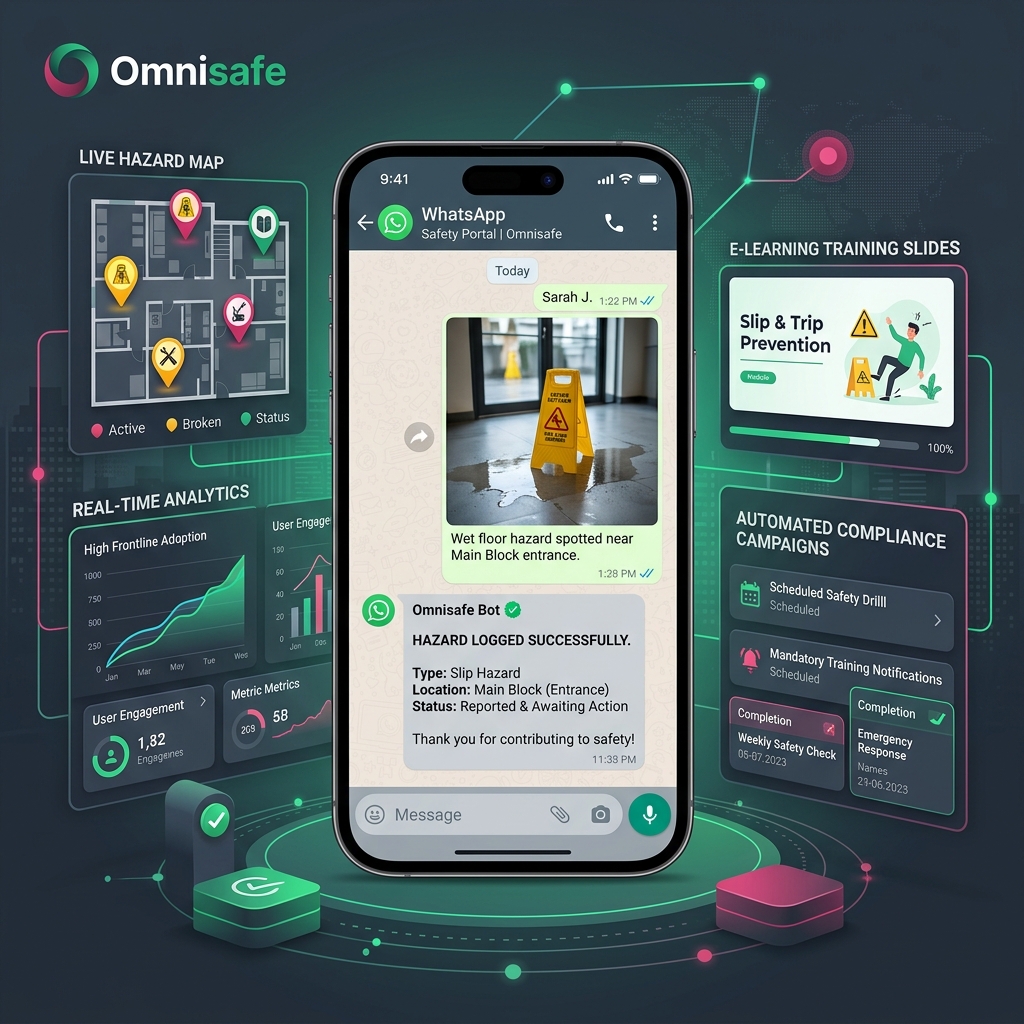
In corporate occupational health and safety (OHS), frontline reporting is often a bottleneck. For years, organizations have invested in specialized mobile applications to digitize their safety files, hoping to simplify hazard logging, risk audits, and training compliance. However, operations managers and SHEQ officers continue to face a familiar problem: workers on the ground do not use them.
This resistance is known as safety app fatigue. Employees, subcontractors, and temporary workers are tired of downloading large, complex enterprise applications that require login credentials, constant updates, and cellular data to run. When a safety report requires navigating complex software menus, workers choose the path of least resistance: they ignore hazards, skip reports, and skip toolbox talks.
The operational cost of app fatigue is significant. When frontline workers refuse to engage with safety tools, safety officers are left with reporting silences that last for weeks, followed by sudden, reactive audits. In industries like logistics and manufacturing where personnel shift frequently, requiring subcontractors to download a dedicated OHS app results in virtually zero compliance. A messaging-first approach circumvents this download block, transforming personal and company-provided smartphones into active logging portals.
To resolve this adoption barrier, organizations must meet workers where they already are. This means turning the world’s most popular messaging app into a fully compliant WhatsApp safety portal. By building an interactive safety hub directly inside WhatsApp, companies can offer a zero-friction portal for hazard logging, risk reviews, e-learning, and task tracking.
Zero-Friction Frontline Reporting
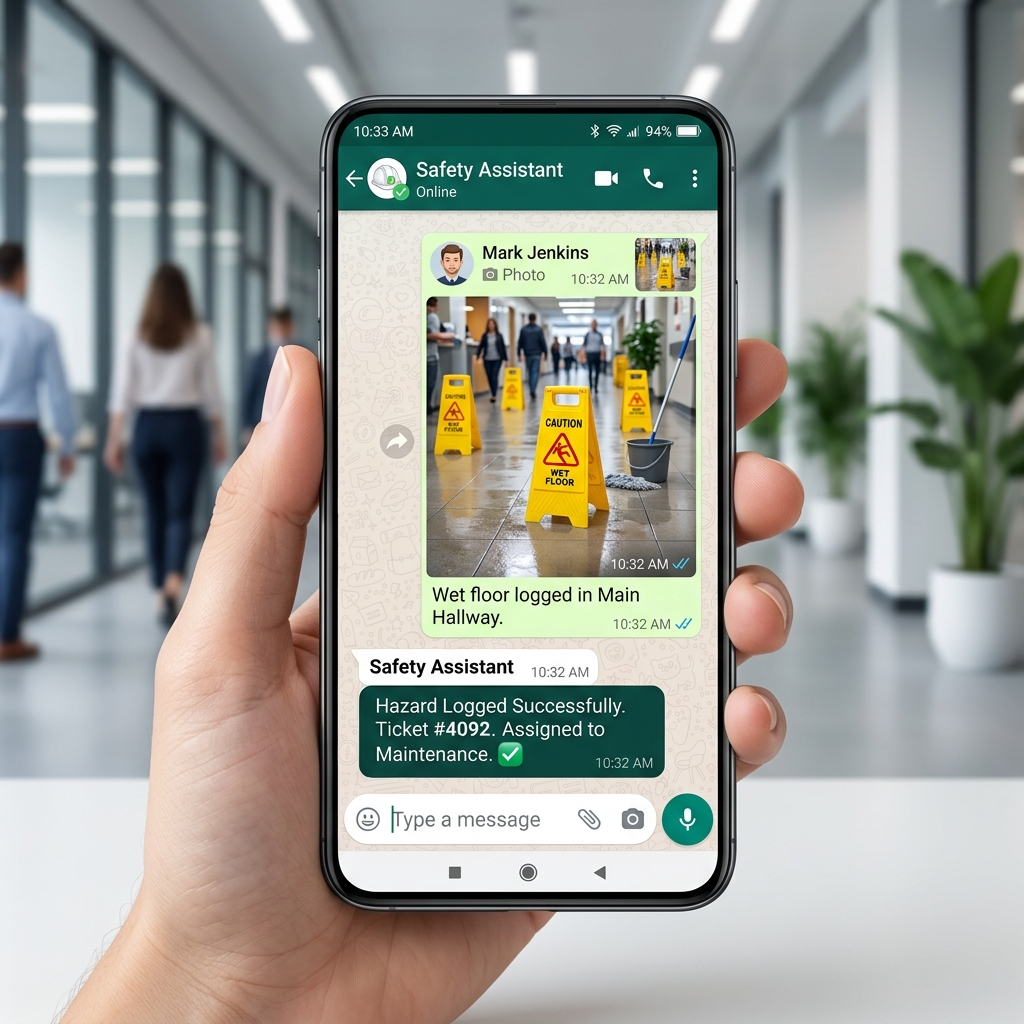
Traditional reporting tools require heavy training and app downloads. Moving safety to WhatsApp introduces zero friction inbound reporting. Workers do not need to download new apps or learn complex software; they log safety files using a tool they already know well.
To improve frontline safety engagement, the reporting interface must be simple. With a WhatsApp-based setup, reporting a hazard is as straightforward as messaging a friend. A worker on a factory floor or construction site identifies a hazard—such as a damaged electrical cord or blocked fire exit. They take a photo, write a brief description (or record a voice note), and send it to the designated safety number.
This layout supports South Africa's diverse, multilingual workforces. Rather than typing complex descriptions in English, workers can send voice notes in their preferred language. The system's conversational safety AI processes the voice note, translates it, and summarizes the hazard details in natural language. By lowering the literacy and technical barriers, frontline engagement spikes, turning passive bystanders into active participants in site compliance.
Behind the scenes, a conversational safety AI processes the message. It extracts the location, hazard type, and severity from the text or voice note. The system then logs the hazard and routes it to the safety officer, initiating the compliance process in seconds.
Conversational AI and Automated Risk Library Matching
A key challenge in hazard reporting is categorization. Safety officers spend hours sorting through raw hazard descriptions to match them with baseline risk assessments. A conversational portal solves this by integrating risk library matching AI directly into the messaging workflow.
When a worker submits a report via WhatsApp hazard reporting, the AI matches the hazard description against the company’s baseline Hazard Identification and Risk Assessment (HIRA) records. For example, if a worker sends a photo of a chemical leak, the system recognizes the risk of exposure, checks the material safety data sheet (MSDS) guidelines in the risk library, and automatically populates the risk rating. This ensures that every submitted hazard is instantly classified and mapped to the master risk register, keeping the company's hazard logs up to date.
This automated classification drastically reduces the delay between hazard identification and mitigation. In traditional paper-based or folder-bound systems, a reported hazard could sit in a safety officer's inbox or desktop folder for days before being properly indexed and categorized. With automated risk mapping, high-risk items (such as exposed wiring or scaffolding failures) are instantly elevated, ensuring that critical threats receive immediate attention. This real-time integration turns a simple chat message into a powerful compliance asset.
Closing the Loop: CAPA Task Management on WhatsApp
Logging a hazard is only the first step. Under the South African Occupational Health and Safety (OHS) Act, companies must demonstrate that they take active steps to mitigate hazards.
A conversational safety platform simplifies this by providing CAPA task management WhatsApp capabilities. When a hazard is logged, the system automatically triggers a Corrective and Preventive Action (CAPA) workflow. It identifies the responsible supervisor, sends them a WhatsApp message outlining the hazard, and assigns a resolution deadline.
The supervisor can update the task directly through the chat. Once the hazard is resolved (for example, the chemical leak is cleaned), they reply with a photo of the resolved area. The AI processes the photo, marks the task as closed, and logs the update. This simplifies task tracking for busy managers, while safety representatives can monitor site compliance in real-time through a centralized dashboard using WhatsApp compliance tracking.
For critical issues, the platform includes built-in escalation rules. If a safety supervisor does not acknowledge a high-priority hazard warning within 2 hours, the platform automatically escalates the alert, messaging senior operations managers via WhatsApp. This creates a reliable, closed-loop safety ecosystem. It ensures that critical CAPA tasks are resolved quickly, preventing incidents before they can lead to workplace injuries or regulatory shutdowns.
WhatsApp Toolbox Talks
Deliver daily safety briefings and WhatsApp toolbox talks directly to workers' phones. Workers verify attendance by replying with a simple text, logging compliance instantly.
Conversational E-Learning
Ditch heavy LMS portals. Run bite-sized conversational e-learning modules via automated chat menus, increasing training completion rates on the ground.
Bypassing SCORM: Conversational E-Learning and Mobile Training
Employee training is a critical component of OHS compliance, but getting workers to log into complex LMS platforms remains a challenge. Traditional SCORM-based training packages are often incompatible with basic mobile browsers, resulting in low completion rates.
A conversational safety portal replaces static modules with interactive mobile safety training delivered via WhatsApp. Instead of launching external browsers, workers complete training modules in the chat. The system sends bite-sized text sections, followed by multiple-choice questions. The worker replies with a number to submit their answer, and the AI assesses their response in real-time.
This is particularly valuable for training field workers and contractors who do not have dedicated desks or company email addresses. Since WhatsApp uses minimal data, workers can complete training modules on their own phones without incurring high data costs. Once a module is completed, the system automatically logs the worker's competency score, generating a certified proof of training record that safety managers can instantly access.
This approach simplifies training delivery. To learn more about how conversational training is replacing legacy systems, read our guide on Why AI-Guided E-Learning is the Future of Safety Compliance.
Automated Safety Campaigns and Offline Safety Reporting
To maintain a strong safety culture, compliance checks must be consistent. A conversational portal helps safety officers manage this through automated compliance campaigns. Safety officers can schedule automated reminders for daily checklist completions, vehicle checks, or medical certificate renewals. These messages are sent directly to the relevant workers, who can complete the checks by replying to the prompt.
These automated campaigns operate like safety calendars. For example, instead of manually chasing subcontractors for expired safety certificates, the platform schedules recurring reminders that ping the subcontractor directly. They can upload their renewed documents in the WhatsApp chat. The AI checks the documents for expiry dates and update logs, keeping files current without safety managers having to write a single follow-up email.
For teams working in remote areas with unstable internet connections, the system supports offline safety reporting. If a worker completes a safety checklist in an area with poor signal, the WhatsApp portal queues their responses. The moment the device reconnects to a network, the messages are sent and processed, keeping compliance records up to date.
This automated, dynamic data logging is a core benefit of modern safety systems. To explore how dynamic reporting compares to traditional document folders, read our comparison guide: Dynamic Risk Management vs. Static Electronic Safety Files.
Unlock Zero-Friction Compliance
Traditional safety platforms fail when adoption is low. By moving reporting and training onto WhatsApp, you can eliminate app fatigue, improve frontline engagement, and simplify compliance tracking.
Omnisafe’s WhatsApp Interactive Hub provides a zero-download OHS portal that connects frontline activity directly to your risk registers and compliance records.
Stop fighting app fatigue. Book a demo today or view our pricing plans to see how Omnisafe can simplify safety management for your team.